


Attorneys Urging TikTok Settlement Approval Call Objectors’ Proposed Opt-Out Procedures ‘Suspicious’
The settlement, if approved, would address millions of reported violations of Illinois’ Biometric Information Privacy Act in multi district litigation consolidated in the Northern District of Illinois.
By: Ellen Bardash | April 19, 2021
Attorneys clashed Monday over the opt-out procedure for class members in the proposed settlement of TikTok’s consumer privacy litigation, coming close to questioning each other’s professional motivations.
During a motions hearing, Jonathan Gardner of Labaton Sucharow said requiring signatures from each class member who wants to opt out of the $92 million settlement would be an unnecessary administrative step, a stance Katrina Carroll of Lynch Carpenter called contradictory to standard procedures, including those Labaton Sucharow has used in other class action settlements.
The settlement, if approved, would address millions of reported violations of Illinois’ Biometric Information Privacy Act in multi district litigation consolidated in the Northern District of Illinois.Gardner, a New York-based Labaton partner representing two objectors, proposed allowing attorneys to submit opt-out forms on class members’ behalf rather than requiring each class member to get a form, sign it and return it.
But Carroll, a founding partner of Lynch Carpenter’s Chicago office, said the signature is key for ensuring each class member is knowingly giving up a chance for arbitration by accepting the settlement.
Gardner fired back, asserting that Carroll’s position that signatures were necessary to prevent fraud implied she’s telling the court that he and other attorneys representing class members are committing fraud. Carroll said she was making no claim of fraud.
“Why, in those circumstances, would you make it as difficult as possible to people to exercise their arbitration rights?” He asked. “Why is it more complicated to opt out of this settlement than to make a claim in this settlement? Why is it more complicated to opt out of this settlement than to become a TikTok user? The parties want to make it as burdensome as possible to opt out.
Carroll responded by saying she found it suspicious a firm would assert 957 class members it’s representing want to opt out but not give the court any proof of that, citing other settlements in which the number of class members attorneys estimated would opt out were significantly higher than the number that ultimately did.
“I’m not accusing anyone of committing fraud. All I’m saying is we need to know that arbitration is the route that these people are choosing voluntarily,” Carroll said.
U.S. District Judge John Z. Lee of the Northern District of Illinois raised the issue near the beginning of the hearing when he asked if it would be possible to add a form to the lawsuit’s website that class members could use to opt out electronically, similar to the one they could use to register a claim.
“People are very confused, and a lot of times, when they think they are submitting an opt-out, they are submitting a claim,” Carroll said, noting the settlement agreement has already provided for an opt-out form but it hadn’t been provided to the court yet.
Lee said he plans to issue a written opinion on whether the settlement can move forward based on elements including the parties’ proposed method of notifying class members.

Ill. Judge Again Asked To Weigh Approval Of $92M TikTok Deal
Law360 (April 19, 2021, 9:52 PM EDT) -- TikTok users who accused the social media giant of privacy violations in multidistrict litigation again asked an Illinois federal judge Monday to grant initial approval to a $92 million settlement over the concerns of objectors questioning its value for the class and, most recently, the proposed procedures for opting out.
U.S. District Judge John Z. Lee didn't rule after a second preliminary approval hearing on Monday, and instead told the parties to expect a written decision. He'll also now consider whether to order TikTok to provide inbox notice of the settlement within the app, something the short-form video app had initially resisted but has since agreed to do, following objections to the proposed notice plan, if ordered by the court.
Co-lead attorney for the TikTok users, Katrina Carroll of Lynch Carpenter LLP, said during the hearing that that deal was a "terrific settlement" in light of threshold risks, like an arbitration clause, "that would have completely eliminated plaintiffs' ability to get out of the gate."
"This settlement is squarely within the range of reasonableness, and that's why we're recommending it," she said.
But several objectors maintained that the deal is insufficient.
Edelson PC attorney Ryan Andrews, representing objector Dennis Litteken, told the court that the settling plaintiffs must provide concrete estimates of exactly who the in-app and direct notice will reach. And since the parties have essentially agreed to in-app notice, the claims rate is going to increase beyond what was initially predicted, he said.
"The problem is, if there are substantial claims, the relief offered begins to look inadequate," Andrews said. A 10% claims rate would get most class members "barely enough to purchase a coffee at Starbucks," he said, while a 5% rate would "maybe get enough to buy lunch."
"I just think that times have changed. … The public thinks they deserve more, and courts are requiring more," he said. "I think we need to be better."
Judge Lee did appear skeptical of the arguments made by objectors claiming that the agreed-upon deal blocks their right to individually arbitrate their claims.
Brian Behnken, Joshua Dugan and 957 other unnamed individuals hoping to opt out of the TikTok settlement argued earlier this month that the settlement violates the Federal Arbitration Act by stopping them from entering arbitration, asking the court to either deny preliminary approval of the agreement or tweak the terms to explicitly exclude claimants who seek to enter arbitration or allow such plaintiffs to opt out online or en masse through their counsel.
Judge Lee did say Monday that he thought a website for claims ought to have an opt-out form available, with a method by which an individual could send the opt-out form to the settlement administrator electronically and not necessarily by physical mail, as required under the current deal.
But there's nothing stopping any class member from opting out and initiating arbitration, or initiating it right now, the judge said. And he questioned how burdensome it was to ask someone to "sign a piece of paper" if they want to opt out.
"There has to be some affirmative showing of intent," Judge Lee said.
Jonathan Gardner of Labaton Sucharow LLP, representing the opt-out objectors, said requiring them to take the affirmative step of opting out effectively adds a term to the agreement to arbitrate between TikTok and users. That very agreement was also used by TikTok as a "bludgeon against plaintiffs' counsel to drive down the value of the settlement," he said.
"Why, in those circumstances, would you make it as difficult as possible to make people exercise their opt-out rights and pursue arbitration?" he said.
Carroll countered that it was "suspicious" that the firm is telling the court that nearly 1,000 people want to opt out and pursue arbitration but hasn't provided any information on who those individuals are or evidence that they want to pursue arbitration willingly.
The opt-out requirements in this case are the same standard procedures used in thousands of other class action cases, she said.
"We're not adding any burden. What we're asking for is basic info on who these people are," Carroll said.
And Scott Drury of Loevy & Loevy, representing objector Mark S., again raised concerns that there's a conflict of interest between minor plaintiffs, who have a different and stronger claim because they're not subject to the arbitration provision, and adult users.
Minors under 13 and minors under 18 should be grouped into subclasses, he said.
Carroll argued that class counsel looked at every available claim for minors and adults and determined that they could recover both under the settlement proposed in this case and the one proposed in a similar case alleging that TikTok collected and shared personally identifiable information about minors under 13 without parental consent.
Minors have "always been at the top of our concern," which is why notice was also targeted to parents and not just users and why counsel pushed for broad injunctive relief, she said.
Under the proposed deal, in addition to the $92 million settlement fund, TikTok has also agreed not to use the app to collect users' biometric data, nor will it collect geolocation or GPS data, transmit U.S. user data outside of the U.S. or store U.S. user data in databases outside of the U.S., unless it makes a disclosure in its privacy policy and complies with all laws.
The social media company will also require new training on compliance with data privacy laws and company procedures for all of its incoming employees and contractors, with annual training thereafter, and TikTok will hire a third party to review the compliance training for the next three years, according to the motion for preliminary approval.
The settling plaintiffs are represented by Lynch Carpenter LLP, Fegan Scott LLC, Bird Marella Boxer Wolpert Nessim Drooks Lincenberg & Rhow PC, Freed Kanner London & Millen LLC, Susman Godfrey LLP, Bottini & Bottini Inc., Hausfeld LLP, Burns Charest LLP and Clifford Law Offices PC.
TikTok is represented by Anthony J. Weibell of Wilson Sonsini Goodrich & Rosati PC.
The objectors and arbitration claimants are represented by Michael D. Smith of the Law Office of Michael D. Smith, and Jonathan Gardner, Melissa H. Nafash and Jonathan D. Waisnor of Labaton Sucharow LLP.
Objector Dennis Litteken is represented by Jay Edelson, Ryan Andrews and J. Eli Wade Scott of Edelson PC.
Objector Mark S. is represented by Scott Drury and Michael I. Kanovitz of Loevy & Loevy.
The case is In re: TikTok Inc. Consumer Privacy Litigation, case number 1:20-cv-04699, in the U.S. District Court for the Northern District of Illinois.
--Additional reporting by Ben Kochman. Editing by Rich Mills.

Ollie's Bargain Outlet
Lynch Carpenter won a contested class certification motion against Ollie’s Bargain Outlets, which was successfully argued by founding partner, Bruce Carlson. This case (click here for the transcript) alleged that the interior of the retail locations were inaccessible because of the manner that the staff positions merchandise, boxes, etc. (e.g., “cluttered aisles”).
Read the judge’s opinion here.

FEDERAL APPEALS COURT: CIVIL RIGHTS CLAIMS AGAINST UBER MUST BE HEARD IN COURT
Plaintiffs suing Uber for failing to provide transportation accessible to people with disabilities cannot be forced out of court and into arbitration, a Federal Court of Appeals ruled on Wednesday. Read the Third Circuit Court of Appeals’ opinion here.
The plaintiffs are people with disabilities who cannot use Uber’s on-demand transportation service in Pittsburgh because there are no wheelchair accessible vehicles available through Uber’s app. The lawsuit, filed in 2019, seeks modifications to Uber’s policies and practices to ensure that the company makes wheelchair-accessible vehicles readily available to Pittsburgh riders who need them. Plaintiffs do not seek monetary damages.
The Third Circuit Court of Appeals rejected Uber’s argument that a provision in its terms of service could apply to people who had never agreed to it and prevent them from bringing discrimination claims against Uber in court.
“Uber and other ride-sharing companies need to be held accountable for their discriminatory exclusion of people with disabilities,” said Disability Rights Advocates Staff Attorney Melissa Riess. “They are a multi-billion dollar company and they can and should be rolling out service that everyone can use. This ruling confirms that they cannot squirm out of court and their obligations to abide by civil rights law through the fine print in their terms of service. We are delighted that our clients will have their day in court.”
“Uber’s business model is in-part calculated to cut into the market share of bus companies and other public transportation companies that offer accessible transportation. While Uber and other ride-sharing services offer a convenient transportation option, this case and similar cases are intended to ensure that that option does not exclude individuals with disabilities.” Said Bruce Carlson, Partner Lynch Carpenter.
The Court of Appeals’ ruling means that the plaintiffs can proceed in court and have their claims heard under federal civil rights law. The court rejected as “meritless” Uber’s novel argument that people who have not downloaded Uber’s app or signed up to its terms of use could be forced into arbitration, upholding the basic legal principle that someone cannot be bound by a contract they did not sign.
In addition to the case filed against Uber in Pittsburgh, DRA has filed cases against Uber in New York and California for their failure to serve riders who use wheelchairs. DRA has also filed a case against Uber’s competitor Lyft in California. These cases are critical to protecting the rights of wheelchair-users throughout the country. More background on the case is available here.
# # #
About Disability Rights Advocates
With offices in New York and California, Disability Rights Advocates is the leading nonprofit disability rights legal center in the nation. Its mission is to advance equal rights and opportunity for people with all types of disabilities nationwide. DRA represents people with all types of disabilities in complex, system-changing, class action cases. DRA is proud to have upheld the promise of the ADA since our inception. Thanks to DRA’s precedent-setting work, people with disabilities across the country have dramatically improved access to education, health care, employment, transportation, disaster preparedness planning, voting, and housing. For more information, visit www.dralegal.org.
About Lynch Carpenter LLP
Lynch Carpenter, LLP is a national class action firm with offices in Pittsburgh, Chicago, Los Angeles, San Diego and Philadelphia. Since 2010, Lynch Carpenter has dedicated significant resources to litigation on behalf of individuals with disabilities and is committed to pursuing impactful cases that advance the interests of the disabled community on the largest possible scale. www.lynchcarpenter.com

Pittsburgh Lawyer Tapped for ‘Most Diverse Leadership Team Ever’ in Data Breach Class Action MDL
US. District Judge Michelle Childs instructed lawyers to consider a diverse team to lead about 20 lawsuits against Blackbaud. Five weeks later, she followed through.
What has been hailed as one of the most diverse leadership teams to lead a multidistrict litigation docket, a group of eight women and four men, including lawyers of color, will pilot class actions brought over a data breach involving cloud management software firm Blackbaud.
The appointment order (//images.law.com/contrib/content/uploads/documents/292/Critical-Mass-nts-3.3.21-data-breach-leadership-appointment.pdf) did not come from just any judge. U.S. District Judge J. Michelle Childs is a 2010 appointee of President Barack Obama to the South Carolina bench. U.S. Rep. James Clyburn, D-South Carolina, recently floated Childs’ name (https://www.nytimes.com/2021/02/21/us/politics/biden-supreme-court-black-woman.html) as one to be considered as a top pick for the U.S. Supreme Court. If a vacancy is created and she is selected, Childs would be the first Black woman to serve on the high court. That would fulfill a campaign pledge of President Joe Biden.
In a Jan. 8 order, Childs instructed lawyers to consider a diverse team to lead about 20 lawsuits against Blackbaud, which is headquartered in Charleston, South Carolina.
“The court also seeks to develop the future generation of diverse MDL leadership by providing competent candidates with opportunities for substantive participation now,” she wrote.
Five weeks later, on Feb. 16, she followed through.
The team includes four co-lead counsel. Amy Keller (https://dicellolevitt.com/attorney/amy-e-keller/), of Chicago’s DiCello Levitt Gutzler, is a veteran MDL lawyer, having served as co-lead counsel in multidistrict litigation over three other data breaches, involving Equifax, Marriott and American Medical Collection Agency. She and Melissa Emert, of Kantrowitz, Goldhamer & Graifman in Chestnut Ridge, New York, who was appointed to the Blackbaud plaintiffs’ steering committee, had the most appointments in MDLs of any woman attorney from 2016 to 2019 (https://www.law.com/2020/07/06/there-are-new-faces-leading-mdls-and-they-arent-all-men/).
It is the first appointment for Krysta Pachman
(https://www.susmangodfrey.com/attorneys/krysta-kauble-pachman/), of Susman Godfrey in Los Angeles, and Marlon Kimpson (https://www.motleyrice.com/attorneys/marlon-e-kimpson), of Motley Rice, a Democratic state senator in South Carolina, who has worked on other mass torts with name partner Joe Rice (https://www.motleyrice.com/attorneys/joseph-f-rice). It’s the first co-lead counsel role for Harper Segui (https://milberg.com/attorney/harper-t-segui/), a partner in Raleigh, North Carolina, at Whitfeld Bryson, now known as Milberg Coleman Bryson Phillips Grossman. The plaintiffs’ steering committee also includes a lawyer from Pittsburgh’s Lynch Carpenter.
Pachman, speaking for the leadership team, said in an email: “Not only did Judge Childs note her conscious effort to avoid implicit bias and not overlook candidates based on race, color, gender, sexual orientation, age or geography, but she also indicated in her case management order that she expected counsel to perform their duties in a way that is free of discrimination and bias, including choosing a diverse slate of vendors.
“She selected what is arguably the most diverse leadership team ever in an MDL to the benefit of the class.”
In the lawsuits, Blackbaud is accused of failing to adequately respond to hackers whose activities exposed its clients and their customers to exposure of personal data. Blackbaud has said, according to media reports, that it combatted and curtailed the threat from the hack.
On Dec. 15, the U.S. Judicial Panel on Multidistrict Litigation sent the Blackbaud lawsuits to Childs, who has handled one prior MDL.
In assembling the leadership team, Childs appointed lawyers from two competing proposed slates, then added three attorneys who applied individually. She appointed Frank Ulmer, of McCulley McCluer in Charleston, as liaison counsel. In addition to Emert, the plaintiffs’ steering committee is: Gretchen Cappio, of Seattle’s Keller Rohrback; Desiree Cummings of Robbins Geller Rudman & Dowd in New York; Kelly Iverson of Lynch Carpenter; Howard Longman of Stull, Stull & Brody in New York; Douglas McNamara, of Washington, D.C.’s Cohen Milstein Sellers & Toll; and Melissa Weiner, of Pearson, Simon & Warshaw in Minneapolis.

Stonefire Naan $1.9 Million False Ad Settlement Gets Final Nod
By: Bloomberg Law | Julie Steinberg in Washington at jsteinberg@bloomberglaw.com
• Consumers may receive $2.50 per item, no injunctive relief
• Bread allegedly mass-produced despite portrayal as traditional
Stonefire Naan maker FGF Brands Inc. and consumers alleging it duped them into thinking mass-produced breads are hand-baked in traditional tandoor ovens won an Illinois federal court’s final approval for a $1.9 million class settlement.
The deal, which provides class members $2.50 for each product purchased, is fair, reasonable, and adequate, Judge Robert W. Gettleman of the U.S. District Court for the Northern District of Illinois said Tuesday.
Emily Friend alleged FGF Brands, a Canadian company, and its American unit FGF USA Brands Inc. tout their products as “hand-stretched and tandoor oven-baked to honor 2,000 years of tradition.”
But rather than being baked in a traditional tandoor oven, which is operated over a wood- or charcoal-burning fire and can accommodate only one or two pieces of naan at a time, Stonefire bread is produced on an “endless” conveyor belt that rotates through a gas-heated commercial oven capable of baking 15,000 pieces an hour, she alleged.
The nationwide class covers purchasers who bought affected Stonefire products between Nov. 16, 2013, and Oct. 23, 2020.
The court also approved the plaintiffs’ attorneys’ request for approximately $650,000 in fees and costs, and a $7,500 service award to Friend.
Gettleman denied the company’s motion to dismiss the suit in 2019. But he said Friend, who’d become aware of the alleged deception, lacked standing to pursue injunctive relief such as marketing changes because she wouldn’t be fooled in the future, a requirement for such relief.
The deal was preliminarily approved in October 2020.
Lynch Carpenter LLP and Gordon Law Offices represented the plaintiffs. Kirk-land & Ellis LLP represented FGF Brands.
The case is Friend v. FGF Brands (USA), Inc., N.D. Ill., No. 1:18-cv-07644, 2/16/21.
Link to read the full article: https://news.bloomberglaw.com/class-action/stonefire-naan-1-9-million-false-ad-settlement-gets-final-nod

JAMISEN ETZEL OF Lynch Carpenter APPOINTED AS INTERIM CO-LEAD COUNSEL IN COVID-19 TRAVEL INSURANCE LITIGATION
A federal judge in the Southern District of New York appointed Jamisen Etzel of Lynch Carpenter LLP to serve as interim co-lead counsel in litigation on behalf of consumers fighting travel insurance claim denials during the COVID-19 pandemic.
The Hon. John G. Koeltl of the United States District Court for the Southern District of New York granted a motion to appoint plaintiffs’ interim leadership counsel on January 29, 2021. The consolidated proceedings in New York include actions brought by consumers throughout the United States who allege that they purchased travel insurance policies from Generali Group and related entities.
The consumers were subsequently denied benefits or premium refunds when their travel plans were cancelled during the COVID-19 pandemic. In late 2020, the United States Judicial Panel on Multidistrict Litigation transferred all related federal suits against Generali to the Southern District of New York.
The other firms appointed as interim co-lead counsel in addition to Lynch Carpenter LLP include Potts Law Firm and Cafferty Clobes Meriwether and Sprengel LLP. Kirby McInerney was appointed liaison counsel. The executive committee includes Raizner Slania LLP, Sauder Schelkopf LLC, Scott + Scott Attorneys at Law LLP, and Zimmermann Reed LLP.
***
Founded in Pittsburgh in 2004, Lynch Carpenter has earned national acclaim for complex litigation for plaintiffs. Lynch Carpenter LLP is a leading law firm that specializes in cyber security, anti-theft, and consumer protection for more than 30 years. The firm currently has offices in Pittsburgh, Philadelphia, San Diego, Los Angeles and Chicago.
Lynch Carpenter Wins Consumer Standing Appeal in Ninth Circuit
Lynch Carpenter attorneys Jamisen Etzel and Kelly Iverson won a significant consumer rights ruling earlier this year from the United States Court of Appeals for the Ninth Circuit. The appeals court held in a published decision that the temporary loss of money is a sufficient “injury-in-fact” under Article III of the Constitution to confer standing on a consumer to file a federal lawsuit.
In the case, called Van v. LLR, Inc., Lynch Carpenter and its client brought suit against the clothing company LuLaRoe, alleging it had improperly overcharged Ms. Van and a class of similarly situated Alaska residents by including a “tax” on its invoices, where the purchases should have been tax free. After being sued by Lynch Carpenter and certain of its clients, but before Ms. Van’s suit was filed, LuLaRoe began refunding the improper charges directly to customer credit card accounts. Those refunds, however, did not credit its customers for all of their damages, nor did it pay compensation for the customers’ lost time value of their money.
The federal district court in Alaska, where Van’s suit was filed, dismissed the case based on lack of subject matter jurisdiction after finding that the consumers’ lost time value of money was “too little” to be a constitutionally recognizable harm conferring standing to sue. Lynch Carpenter appealed that decision, arguing that there is no minimum monetary loss threshold required to obtain standing, and that federal courts traditionally recognize invasions of a person’s possessory interests and the lost time value of money as concrete injuries under the Constitution.
The Ninth Circuit held oral argument on June 3, 2020, and Jamisen Etzel argued on behalf of Ms. Van. The appellate panel agreed with Lynch Carpenter’s position, and on June 24, 2020 reversed the lower court, finding that “[f]or standing purposes, a loss of even a small amount of money is ordinarily an ‘injury,’” and that “the temporary loss of use of one’s money constitutes an injury in fact for purposes of Article III.”
The decision is an important one for consumers because it confirms that they may go to court and obtain interest or other compensation when their money has been improperly held by others for significant periods of time.
You can read the full opinion at this link. The judges of the Ninth Circuit panel were Morgan Christen, Paul J. Watford, and Bridget S. Bade. Jamisen Etzel led the appellate briefing and oral argument. Kelly Iverson assisted in the appeal and serves as lead counsel in Lynch Carpenter’s cases against LuLaRoe.

Judge Appoints ‘Team of Rivals’ to Lead TikTok Privacy Class Action Lawsuits
 On Monday, a federal judge appointed lawyers to lead the privacy class actions against TikTok who previously accused each other of mishandling the litigation. They include co-lead counsel Ekwan How of Bird Marella and Katrina Carroll of Lynch Carpenter.
A Chicago federal judge has named a leadership group for privacy class actions against TikTok, in the wake of a selection process that often featured infighting among plaintiffs counsel.
Two groups of plaintiffs lawyers battled over leadership of the multi district litigation — about 20 class actions sent last month to U.S. District Judge John Lee of the Northern District of Illinois. One group, led by Katrina Carroll, of Lynch Carpenter in Chicago, and Jonathan Jagher of Freed Kanner London & Millen in Conshohocken, Pennsylvania, insisted they had reached a confidential settlement of the cases last month. The other, led by Megan Jones, a San Francisco partner at Hausfeld, and Ekwan Rhow of Los Angeles-based Bird, Marella, Boxer, Wolpert, Nessim, Drooks, Lincenberg & Rhow, raised concerns about the negotiations, in which they did not participate.
On Monday, Lee appointed How and Carroll as co-lead counsel, along with Elizabeth Fegan, of FeganScott, who supported Carroll’s group.
Lee, who previously has cautioned lawyers to work together and include all parties in settlement negotiations, did so again in his leadership order.
“The court anticipates that the plaintiffs’ leadership group will work by consensus and that plaintiffs’ counsel in particular will do everything possible to facilitate a consensus decision-making process,” Lee wrote. “It also is worth emphasizing that cooperation by and among all members of the plaintiffs’ leadership group is essential for the orderly and efficient resolution of this MDL.”
He ordered lead counsel to submit a proposal by Oct. 9 on how they plan to work together, with a status report due Oct. 30 that includes updates on the proposed settlement.
He set a virtual hearing for Nov. 4.
Carroll, in an email, said, “I look forward to proceeding in a coordinated effort for the benefit of our clients and the class.” How did not respond to a request for comment.
The defendant, TikTok Inc., is the developer of a popular app for creating short form videos on mobile devices. It got a reprieve from being banned in the United States on Sunday.
The battle for class action leadership comes as President Donald Trump, citing national security concerns, issued orders last month, one of which threatened to limit new downloads of TikTok in the United States by Sept. 20, later extended to Sept. 27, if it did not reach a real with a U.S. company.
TikTok, whose Chinese-based parent ByteDance announced plans to sell its U.S. operations to Oracle and Walmart, countered with its own lawsuit against the U.S. government. In that case, a federal judge in the District of Columbia struck down Trump’s order. The order, unsealed on Monday, found the International Emergency Economic Powers Act, cited in Trump’s order, exempted “informational materials” and “Personal communication” with no economic value, both of which are largely TikTok’s content.
In a related case, a federal judge in Pennsylvania on Sept. 26 rejected a motion for temporary restraining order brought by three TikTok users challenging trump’s order on constitutional grounds.
The fight among the lawyers in the privacy cases adds another unusual twist for TikTok. Those cases allege the video sharing app did not inform users, who include minors, that it was collecting their biometric data, in violation of the Illinois Biometric Privacy Act, which provides statutory damages between $1,000 and $5,000 per violation, as well as other computer and privacy laws.
Problems among the lawyers surfaced a few months before Aug. 4, when the U.S. Judicial Panel Multidistrict Litigation sent the cases to Lee’s courtroom.
Days after the transfer of the cases, TikTok and Carroll’s group informed Lee in an Aug. 16 joint status report that they had reached a class action settlement “in principle” following a mediation three days earlier. The settlement, which they anticipated filing in court Oct. 26 for preliminary approval, must remain confidential, they wrote, because of TikTok’s sale discussions.
The settlement didn’t involve everyone. Carroll, in her Sept. 8 for leadership, insisted that Rhow’s group, despite having conducted their own failed mediation talks with TikTok on April 6, refused to participate in the negotiations last month.
In her leadership application papers, she cautioned that a “forced marriage” with Rhow’s team “could derail the settlement and irreparably harm the class.”
Rhow, in court papers, has countered that TikTok chose to settle with a preferred group of plaintiffs lawyers, who shut his group out of negotiations. He insisted that TikTok had prohibited him from attending the mediation and, since then, has kept the settlement a secret.
His group raised concerns about the impact that the “destruction of crucial evidence” under Trump’s executive orders and TikTok’s imminent sale would have on the privacy class actions.
TikTok, which continued to support the settlement, took the unusual step of getting involved in the fight, praising Carroll’s group, who had negotiated the deal, which criticizing Rhow’s group for “overaggressive and excessive pleadings, emergency motions, and attempts to sabotage the efforts of other parties to resolve the litigation.”
Monday’s order created a plaintiffs’ steering committee made up of lawyers in both groups. In Rhow’s group, Jones and Amanda Klevorn, of Burns Charest, joined the committee. Support Carroll’s group were Jagher; Michael Gervais, of Susman Godfrey; and Albert Chang, of Bottini & Bottini.
Lee also appointed Shannon McNulty, of Clifford Law Offices, who was part of Rhow’s group as liaison counsel.
At a Sept. 24 hearing, Lee insisted that putting the dueling lawyers together would prevent fights down the road.
“Some in their briefs suggest that the court need not go this route and characterized such an approach as a ‘forced marriage,” he said, according to the transcript. “Others referred to this as a ‘team of rivals.’ I, myself, rather than referring to it in those terms, would like to think of it as an all-star team of sorts or an Olympic team, made up of individuals from perhaps different individual teams, but who are asked to come together to pursue the interests of all of the plaintiffs as a whole in this litigation."
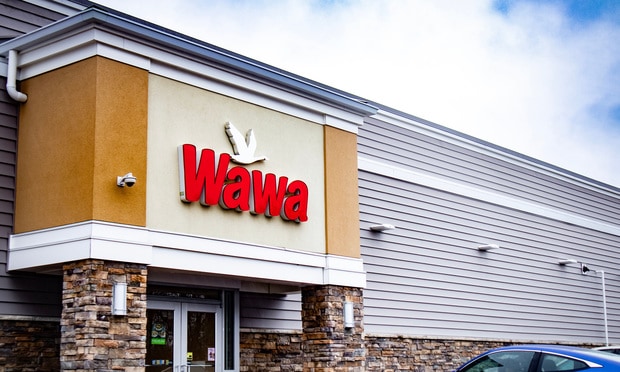
Federal Judge Turns to Class Action Veterans to Lead Wawa Data Breach Litigation
The leaders are set to handle three tranches of litigation: one brought by consumers, another from financial institutions, and the last involving employees.
Lawyers who’ve been involved in a range of class actions, from the Equifax and Capital One data breach cases to drug marketing litigation, have been selected to lead a mass action against the regional convenience store chain Wawa.
U.S. District Judge Gene Pratter of the Eastern District of Pennsylvania on June 12 selected nine attorneys from Pennsylvania and New York to act as co-lead, class and liaison counsel in the proposed class action lawsuit over the hack announced late last year that exposed payment card information from Wawa users at potentially all of the company’s locations. The leaders are set to handle three tranches of litigation: one brought by consumers, another from financial institutions, and the last involving employees.
Specifically, Pratter appointed Sherrie Savett of Berger Montague; Roberta Liebenberg of Fine, Kaplan and Black; Benjamin Johns of Chimicles Schwartz Kriner & Donaldson-Smith; and Linda Nussbaum of Nussbaum Law Group as interim co-lead counsel for the consumer class action cases.
For the lawsuits brought by financial institutions, the judge appointed Gary Lynch of Lynch Carpenter; Christian Levis of Lowey Dannenberg; and Jeannine Kenney of Hausfeld as interim class counsel, with Mindee Reuben of Lite DePalma Greenberg also being appointed as interim liaison counsel for that group.
Pratter also appointed Donald Haviland of Haviland Hughes as interim class counsel for the employee plaintiffs.
According to Pratter, with the appointments, the attorneys are now tasked with developing and performing the discovery, coordinating meetings and calls, examining witnesses and acting as the primary point of contact between the parties and the court. Pratter also said the attorneys could apply for long-term leadership positions as well.
“The main criteria for such leadership will be willingness and availability to commit to a time-consuming project, ability to work cooperatively with others, professional experience in this type of litigation, and access to sufficient resources to prosecute the litigation in a timely manner,” Pratter said.
The appointment settles a dispute that had arisen between several firms over who should lead the class action.
In early January, Johns and Savett filed motions in the cases asking the court to consolidate the proposed class actions and have them appointed as lead counsel. The motions also asked the court to appoint attorneys from Ahdoot & Wolfson in Los Angeles; Federman & Sherwood in Oklahoma City; Philadelphia-based Kohn Swift & Graf; and New York-based firms Stull, Stull & Brody and Milberg Phillips Grossman.
Nussbaum, however, filed a response, saying the request by Johns and Savett was “premature” and that she also planned to move to be appointed lead counsel.
The first lawsuits over the data breach began to be filed Dec. 20—the day after Wawa’s CEO said in an open letter there had been a breach of the company card payment data. According to the letter, malware that had been active since March was discovered Dec. 10, and the company contained it by Dec. 12. The letter said the malware potentially exposed payment card information from customers at all Wawa locations, including credit and debit card numbers, expiration dates and names.
Attorneys said they appreciated being appointed to the position.
“We are pleased with the court’s order, and look forward to moving the case forward on behalf of the consumer plaintiffs,” Johns said.
In a statement published online, Kenney said, “I am honored to be serving with such talented co-counsel and look forward to obtaining relief for credit unions and other financial institutions injured by this data breach.”
Lynch and Reuben both declined to comment and Savett, Liebenberg, Nussbam, Levis and Haviland did not return a call seeking comment.